 Batteries
 Inverters
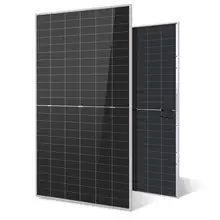 Solar Panels
 Solar Kits
 Mounting & Hardware
 Components & Wiring


Short answer: How long do solar panels last? Most last 25 to 35 years. That’s the average operational lifespan in 2025, according to a Berkeley Lab survey the U.S. Department of Energy cites. Panels don’t just die at the end. They slowly lose output, often around half a percent a year, so an old panel still makes most of its rated power.
Key takeaways
- Expect 25 to 35 years of useful life from a modern panel.
- Output fades slowly. Research from NREL found a median loss of about 0.5% to 0.6% a year for crystalline silicon panels.
- Read two warranties on the datasheet: the product warranty (defects) and the linear power warranty (output over time).
- Heat is the main thing that can speed up wear, so mounting and airflow matter.
How long do solar panels last on average?
In real life, solar panels last longer than most people guess. The DOE’s page on end of life management for solar panels points to a Berkeley Lab survey of U.S. solar professionals. It found the average operational lifespan went from around 20 years in 2007 to 25 to 35 years in 2025.
That number is about useful life, not a cliff. A 30 year old array doesn’t go dark on its birthday. It just makes a bit less power than it did when it was new, and at some point you decide the drop is worth fixing.
Most systems in the field today are still young, too. So the real record for current panels is still being written.
How much power do solar panels lose each year?
Good panels lose roughly half a percent of their output per year. That’s the slow fade called degradation.
The best data here comes from NREL. Its compendium of photovoltaic degradation rates pulled together more than 11,000 measured rates from almost 200 studies. For crystalline silicon panels, the median landed in the 0.5% to 0.6% per year range, with the average a bit higher at 0.8% to 0.9%.
Here’s what that looks like on a real datasheet. The SunGold SGN-450-BDG5 450W bifacial panel guarantees 99% of rated power after year one, then no more than 0.40% loss a year, ending at 87.4% at year 30. Applied to a 450W panel, the warranted floor looks like this:
| Year | Guaranteed output | On a 450W panel |
|---|---|---|
| 1 | 99.0% | about 446W |
| 10 | 95.4% | about 429W |
| 20 | 91.4% | about 411W |
| 30 | 87.4% | about 393W |
These are the minimums SunGold puts in writing, figured at standard test conditions. Your actual output on any given day depends on sun, heat and shade.

What does a 30 year solar panel warranty actually cover?
It usually covers output, not the whole panel. Most datasheets split the promise in two, and the two numbers are very different.
- Product warranty. This covers defects in materials and workmanship. SunGold’s SGN-450-BDG5 and SGN-440-SW5 mono black panel both list up to 12 years.
- Linear power warranty. This promises the panel will still make a set share of its rated power. On both SunGold panels it runs 30 years, ending at 87.4%.
So a panel can be well inside its power warranty but past its product warranty. When you compare panels, look at both lines, plus the yearly degradation figure. A lower yearly number means more power left in the later years.
What makes solar panels wear out faster?
Heat is the big one. NREL’s compendium notes that hotter climates, and mounting setups that keep panels hot for long stretches, can lead to faster degradation in some products, though not all.
A few other things are worth watching:
- Physical damage. Cracked glass or a damaged frame lets moisture in, and that’s hard on cells.
- Rough handling. Panels dropped or flexed during shipping or install can get tiny cell cracks you can’t see.
- Cheap parts around the panel. Loose or poor connectors cause problems that look like panel failure.
The temperature coefficient on a datasheet is a related number, but it’s about daily output, not lifespan. SunGold lists -0.29% per degree C for both panels above, which means less power lost on hot afternoons.

Do inverters and batteries last as long as solar panels?
Not always, so plan on each part having its own, separate warranty. A solar system is a set of parts, and each one ages on its own schedule.
Check the inverter and battery spec sheets on their own terms when you shop for a complete solar kit. If an inverter or battery wears out before the panels, you can usually replace it without touching the array. Our guide on solar panel cost and payback for a house walks through how that fits the bigger budget.
When should you replace solar panels?
Replace them when they’re damaged or when output has dropped more than you’re willing to live with, not on a set date.
- Compare this year’s production with past years, using the same months.
- Look for visible damage, like cracked glass, burn marks or browning.
- Check the figures against the linear power warranty. If a panel is below its guaranteed level, file a claim before you buy new.
- If you add panels later, match the electrical specs of the string, or put the new ones on their own input.
Shopping for new modules? Browse our solar panels, and see how the two SunGold models stack up in our bifacial vs mono black panel comparison.
Frequently asked questions
Do solar panels stop working after 25 years?
No. A 25 or 30 year figure is a warranty term or an average useful life, not a shutoff date. Panels keep producing past it, just at lower output. The SunGold panels we carry, for example, are guaranteed to make at least 87.4% of rated power at year 30, and many panels keep running after that.
How much power will a 450W solar panel make after 30 years?
It depends on the panel’s degradation rate. On the SunGold SGN-450-BDG5, the warranty guarantees 87.4% of rated power at year 30, which is about 393W at standard test conditions. A panel with a higher yearly degradation figure would end up lower, so compare that number on each datasheet.
Do solar panels degrade faster in hot climates?
They can. NREL’s review of degradation studies found that hotter climates and mounting that keeps panels hot for long periods may lead to higher degradation in some products, but not all. Good airflow under the panels and a low temperature coefficient both help with heat.
Do bifacial panels last longer than regular panels?
Not by default. Lifespan comes down to the specific panel’s build and warranty. The SunGold SGN-450-BDG5 bifacial and SGN-440-SW5 mono black panels carry the same terms: up to 12 years on the product, 30 years on linear power and 0.40% yearly degradation.
New book:
DIY Off-Grid Solar, Start to Finish.
Off-grid only, written for beginners who want to do the work carefully.
Kindle, $4.99 through New Year's: instant digital download. Paperback, $29.99: 370+ pages, 120+ diagrams, full-size 8.5 x 11 printed copy.