 Batteries
 Inverters
 Solar Panels
 Solar Kits
 Mounting & Hardware
 Components & Wiring


Short answer: A split phase inverter puts out 120/240V AC the same way a US utility service does: two 120V hot legs plus a neutral, with 240V across the two legs. You need one if your home or cabin runs 240V loads like a well pump, dryer, range or central AC. A 120V only inverter can’t run those directly.
Key takeaways
- Most US homes are wired for 120/240V split phase, so a split phase inverter can feed a standard breaker panel.
- Check for “120/240V” and “L1/L2/N” on the spec sheet. Those are the clues that an inverter makes true split phase power.
- Some inverters only make 240V or 120V and need a separate transformer to create split phase.
- Stacking two or more matched units in parallel is a common way to get more 240V capacity.
- Balance your 120V circuits across both legs so neither side does all the work.
What is a split phase inverter?
It’s an inverter that makes two 120V outputs, called L1 and L2, that are opposite each other. Measure from either leg to neutral and you read 120V. Measure from L1 to L2 and you read 240V.
That matches the service most American homes get from the utility. Your lights and outlets use one leg and the neutral. Big appliances use both legs at once for 240V.
So when you shop for a split phase inverter, you’re really shopping for something that can stand in for the grid at your main or backup panel without rewiring the house.
Do I need a split phase inverter for my house?
If you want to power anything that runs on 240V, yes. Common 240V loads in a US home include:
- Well pumps
- Electric dryers and ranges
- Central air conditioners and many heat pumps
- Electric water heaters
- Level 2 EV chargers
If your system only needs to run 120V things, like a small cabin with lights, a fridge and a few outlets, a 120V inverter can work. Most people building a whole home or backup system end up wanting split phase, though, because it keeps every circuit in the panel available.
Split phase vs single phase inverter: what’s the difference?
A single phase inverter makes one AC output. Depending on the model, that’s either 120V or 240V, but not both from a shared neutral. A split phase inverter gives you both voltages at once.
| Feature | 120V single phase | 240V single phase | 120/240V split phase |
|---|---|---|---|
| Runs 120V outlets and lights | Yes | Not without a transformer | Yes |
| Runs 240V appliances | No | Yes | Yes |
| Feeds a standard US breaker panel | Only part of it | Not without a transformer | Yes |
| Output wires | Hot, neutral | Two hots or hot and neutral | L1, L2, neutral |
Some 240V single phase inverters are paired with an autotransformer to make split phase. The Growatt ATS 5000T-ES split phase transformer is one example. It takes 240V in and puts out 120/120V on L1, L2 and neutral, with up to 5000VA combined and no more than 2500W of difference between the two legs.
How do I tell if an inverter is split phase from the spec sheet?
Look at the AC output section. A true split phase unit lists 120/240V output and calls for L1, L2 and N connections.
Here’s how that reads on a few inverters we carry:
- EG4 6000XP: the EG4 6000XP spec sheet lists 120/240VAC output, 6000W nominal, 25A max continuous at 240V, and says L1/L2/N are required. EG4 describes it as a transformerless split phase design that makes 120/240V from a single unit.
- SunGold Power SPH8048P: the manual shows split phase mode as the default, with 120V from each leg to neutral. It can also be set to single phase mode, where L1 and L2 are in the same phase.
- RUiXU RX-12K: a 48V hybrid inverter rated for 11,400W at 240V with a 120/240V rated output, wired L1/L2/N/PE.
If a spec sheet only says “120VAC” or “230VAC” with a single hot, it’s not split phase on its own.

Can you stack inverters for more split phase power?
Often, yes. Many off-grid and hybrid inverters can run in parallel with identical units to add capacity.
EG4 says the 6000XP can parallel up to 16 units, and the 12000XP also lists 16 units in parallel. SunGold sells the SPH8048P as a two unit 16kW pair. We compared one big unit against two smaller ones in EG4 6000XP vs 12000XP if you’re weighing that choice.
Parallel setups have rules. Use matched models and firmware, follow the maker’s wiring and settings guide, and have a licensed electrician sign off on the panel side.
Why does balancing the two legs matter?
Each 120V circuit draws from only one leg. If all your busy 120V loads sit on L1, that leg works hard while L2 sits nearly idle.
Some equipment puts a hard number on this. The Growatt transformer above allows at most 2500W of difference between the legs, and loads more lopsided than that need a second unit. For any inverter, check the manual for how much each leg can carry on its own, then spread your heavy 120V circuits across both sides of the panel.
How do I pick the right split phase inverter size?
Start with your biggest running load and your biggest startup surge, then pick a unit or parallel set that covers both.
- List your 240V loads. Note running watts and any motor startup surge, especially well pumps and AC compressors.
- Add the 120V loads that run at the same time. That total is your continuous target.
- Match the battery voltage. The inverters above are 48V units, so plan a 48V battery bank.
- Decide off-grid or hybrid. Off-grid units run without the grid. Hybrid units can also work with utility power. Our guide to solar inverter types for a house covers the differences.
When you’re ready to compare models, browse our off-grid inverters, where most listings say 120/240V split phase right in the name.

Frequently asked questions
Can a split phase inverter run 120V and 240V loads at the same time?
Yes. That’s the main reason to buy one. Each 120V circuit uses one leg and the neutral, and 240V appliances use both legs together. The total still has to stay within the inverter’s rated output, and each leg has its own limit, so check the manual and spread your 120V circuits across both legs.
Is split phase the same as two phase power?
No. Split phase is single phase power split into two 120V legs that are opposite each other, which gives 240V between them. It’s the normal residential service in the US. Three phase power is a different system used mostly in commercial buildings, and true two phase power is very rare today.
Can I use a 240V inverter without a neutral for my house?
Only for 240V loads, unless you add a split phase transformer. A standard US panel needs L1, L2 and a neutral to feed 120V outlets and lights. A transformer such as the Growatt ATS 5000T-ES converts a 240V single phase output into 120/120V split phase so the panel can run both kinds of circuits.
What size split phase inverter do I need for a well pump?
Size for the pump’s startup surge, not just its running watts. Motors can pull several times their running power for a moment when they start. Check the pump nameplate or manual for both numbers, then pick an inverter, or a parallel pair, whose surge and continuous ratings cover the pump plus whatever else runs at the same time.
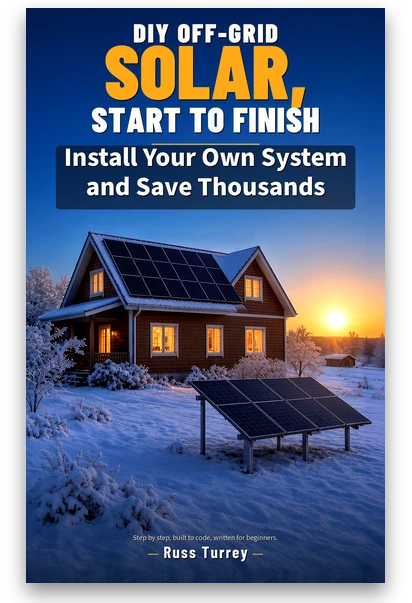
New book:
DIY Off-Grid Solar, Start to Finish.
Off-grid only, written for beginners who want to do the work carefully.
Kindle, $4.99 through New Year's: instant digital download. Paperback, $29.99: 370+ pages, 120+ diagrams, full-size 8.5 x 11 printed copy.