 Batteries
 Inverters
 Solar Panels
 Solar Kits
 Mounting & Hardware
 Components & Wiring


Short answer: In the monocrystalline vs polycrystalline solar panels debate, monocrystalline wins for almost every home today. Mono cells are cut from a single silicon crystal, so they turn more sunlight into power per square foot. Polycrystalline panels were the budget pick for years, but they’ve mostly faded from the market.
Key takeaways
- Monocrystalline silicon made up 96% of global solar shipments in 2022, according to the U.S. Department of Energy.
- DOE puts real world efficiency for today’s mass produced silicon modules at 20% to 22%.
- Within mono, the newer split is N-type (TOPCon and heterojunction) vs older P-type designs like PERC.
- For a home or off-grid kit, compare watts, efficiency, temperature coefficient and warranty, not just the cell name.
What is the difference between monocrystalline and polycrystalline solar panels?
The difference is how the silicon is made. A monocrystalline cell is sliced from one continuous crystal, while a polycrystalline cell is made from many small crystals fused together.
The DOE’s overview of crystalline silicon photovoltaics walks through the mono process. Solar grade silicon is melted, a round single crystal ingot is pulled out of the melt, and diamond wire saws slice it into thin wafers. Those wafers become cells.
Poly skips the single crystal step. The silicon cools into a block with lots of crystal grains, which is why older poly panels have that speckled blue look. Mono cells look dark and even, which is also why most black panels you see on roofs now are mono.
Here’s the quick side by side:
| Feature | Monocrystalline | Polycrystalline |
|---|---|---|
| Silicon structure | One continuous crystal | Many small crystals |
| Typical look | Dark, even black | Speckled blue |
| Space needed for the same watts | Less | More |
| Where the market is | Nearly all new panels | A small, shrinking slice |
| Newer cell designs (PERC, TOPCon, HJT) | Built on mono wafers | Not where the industry is headed |
Are monocrystalline solar panels more efficient?
Yes. Mono silicon is the higher efficiency option, and that’s the main reason it took over.
DOE says monocrystalline silicon cells can top 27% efficiency in ideal lab conditions, and that production modules land at 20% to 22% in the real world. The agency also notes that industrially made silicon cells beat any other mass produced single junction device on efficiency.
What does that mean on your roof? A more efficient panel makes more watts from the same footprint. If roof space is tight, or you’re building a ground mount and want fewer rows, mono gets you more power per rack.
Take the SunGold SGN-450-BDG5 450W panel as an example. Its datasheet lists N-type monocrystalline cells and a module efficiency of 22.5%.

Are polycrystalline solar panels still worth buying?
For most buyers, no. Poly isn’t a bad technology, but the market has moved on, and nearly every new panel you’ll shop for is mono.
The numbers make the point. DOE reports that mono silicon was 96% of global solar shipments in 2022, and that most of the remaining 4% was cadmium telluride thin film. That leaves very little room for poly.
A few cases where poly could still make sense:
- You’re replacing a single panel in an older poly array and need a close electrical and visual match.
- You found a used or surplus poly panel cheap for a shed, RV or small project where space doesn’t matter.
- You have plenty of ground space and price per watt is the only thing you care about.
Even then, compare the price per watt against a new mono panel before you buy. A cheap poly panel that needs more space and more racking isn’t always the bargain it looks like.
What are N-type and P-type monocrystalline panels?
They’re two flavors of mono cell, and this is the comparison that matters now. N-type is the newer, higher efficiency design.
According to DOE, aluminum back surface field cells ruled the market until about 2018, when PERC cells took over because they were more efficient. Now another shift is under way, to N-type designs such as TOPCon and silicon heterojunction (SHJ, often sold as HJT). DOE says that move is also driven by efficiency gains.
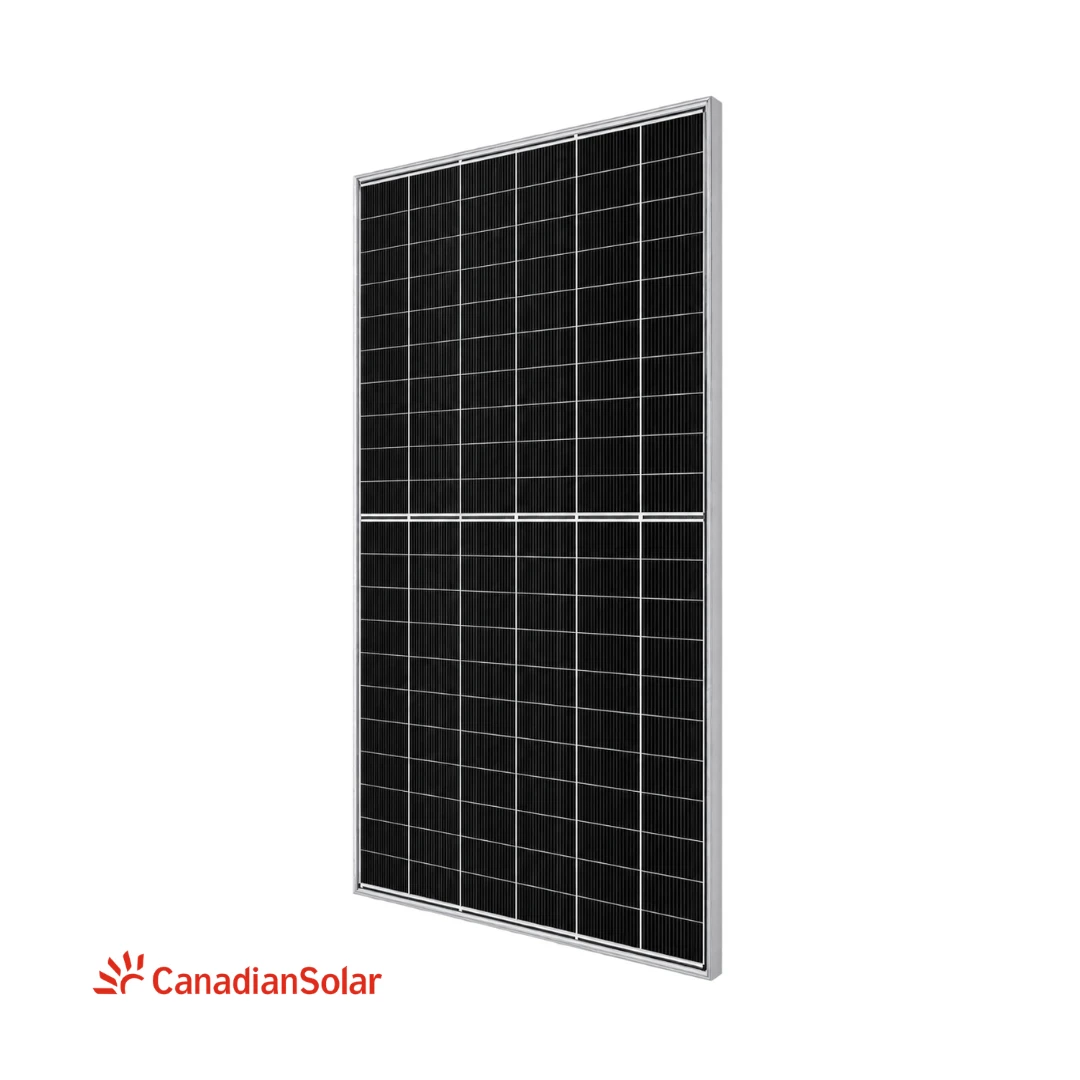
You’ll see this on spec sheets and product names. The Canadian Solar 695W TOPCon panel uses the N-type TOPCon design right in its name. SunGold’s datasheet for the SGN-450-BDG5 states that the N-type cell naturally has no light induced degradation (LID), a small early power loss that can affect some P-type cells.
Do monocrystalline panels last longer than polycrystalline?
Both are crystalline silicon, so both are built for the long haul. DOE says crystalline silicon modules reach life spans of 25 years or more and lose less than 1% of output a year.
So lifespan comes down to the specific panel’s build and warranty more than mono vs poly. Look at three numbers on the datasheet:
- Linear power warranty. How much output is guaranteed at year 25 or 30.
- Annual degradation. The yearly loss after year one. Lower is better.
- Temperature coefficient (Pmax). How much power drops per degree of heat. SunGold lists negative 0.29% per degree C for the SGN-450-BDG5, so less is lost on hot afternoons.
For more on aging, see our guide on how long solar panels last.
Which type of solar panel should you buy for your home?
Buy monocrystalline, and lean N-type if the price is close. Then pick the right size and style for your setup.
- Tight roof: go with the highest watts and efficiency that fit your inverter’s input limits.
- Ground mount with open space: bifacial mono panels can pick up extra light off the ground behind them.
- Clean look on the house: a mono black panel blends in best.
Not sure between bifacial and all black? Our bifacial vs mono black panel comparison breaks down two SunGold N-type models. Or browse all of our solar panels to compare watts and pallet pricing.
Frequently asked questions
Is monocrystalline better than polycrystalline?
For nearly every home system, yes. Monocrystalline panels turn more sunlight into power per square foot, and they are what the market has moved to. The U.S. Department of Energy reports mono silicon made up 96% of global solar shipments in 2022. Poly can still work for a cheap side project where space doesn’t matter.
How can I tell if a solar panel is mono or poly?
Look at the cells and the datasheet. Mono cells are dark and uniform, often black, while poly cells have a speckled blue look from the many crystal grains. The datasheet will also list the cell type, such as N-type monocrystalline, along with the module efficiency.
Do monocrystalline panels work better in heat?
It depends on the specific panel, not just the cell type. Check the temperature coefficient of Pmax on the datasheet. A number closer to zero means less power lost as the panel heats up. For example, SunGold lists negative 0.29% per degree C for its SGN-450-BDG5 N-type mono panel.
Is N-type better than P-type solar?
N-type is the newer, higher efficiency design, and the U.S. Department of Energy says the industry is shifting toward N-type cells like TOPCon and heterojunction for that reason. SunGold’s datasheet for its SGN-450-BDG5 also notes that N-type cells naturally have no light induced degradation.
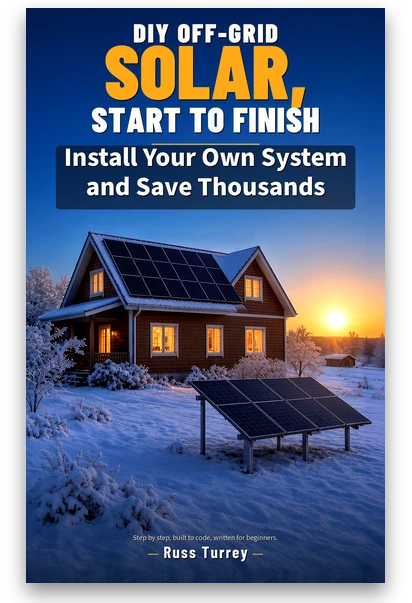
New book:
DIY Off-Grid Solar, Start to Finish.
Off-grid only, written for beginners who want to do the work carefully.
Kindle, $4.99 through New Year's: instant digital download. Paperback, $29.99: 370+ pages, 120+ diagrams, full-size 8.5 x 11 printed copy.